
Introduction
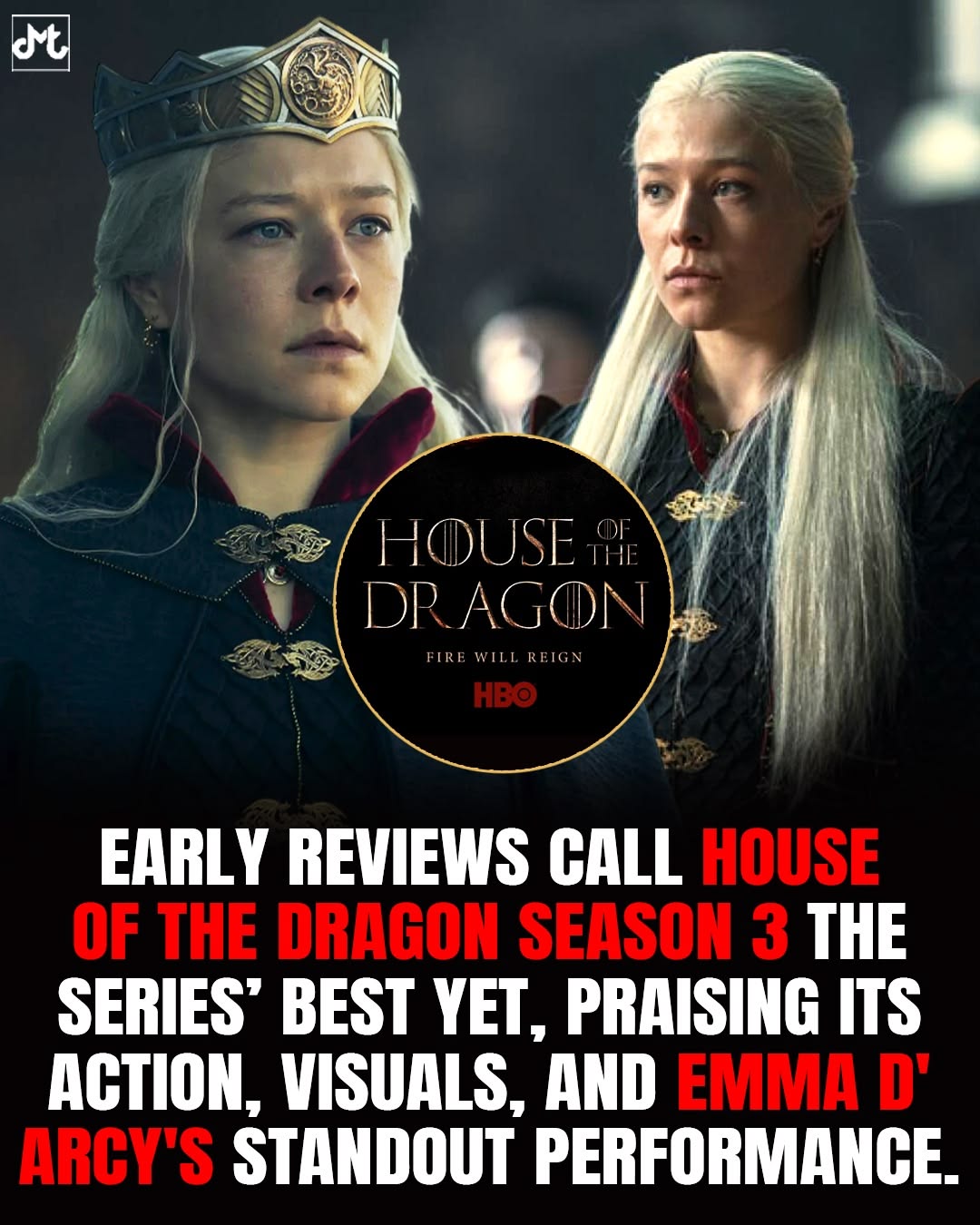
After two seasons of political intrigue, devastating betrayals, and breathtaking dragon battles, House of the Dragon Season 3 finally delivers the full-scale civil war that fans of George R. R. Martin’s Fire & Blood have been anticipating. The latest season raises the stakes dramatically as the conflict between Team Black and Team Green erupts into open warfare, bringing larger battles, deeper character development, and even greater emotional consequences. Early reviews have praised the season for embracing the epic scale that viewers expected from the beginning, with critics highlighting stronger pacing, improved storytelling, and spectacular action sequences.
Unlike previous seasons, which focused heavily on building political tension, Season 3 places audiences in the heart of the Dance of the Dragons. Every episode pushes the conflict forward as alliances shift, kingdoms choose sides, and dragons become the ultimate weapons of war. At the same time, the series continues to explore the personal cost of ambition, family loyalty, grief, and revenge, reminding viewers that every victory comes at a devastating price.
Whether you’re a longtime Game of Thrones fan or a newcomer to Westeros, this guide covers everything you need to know about House of the Dragon Season 3, including its release, cast, story, major characters, reviews, and what the future holds for HBO’s biggest fantasy franchise.
House of the Dragon Season 3 Release Date
Following a lengthy production period, House of the Dragon Season 3 premiered in June 2026, continuing HBO’s adaptation of George R. R. Martin’s Fire & Blood. Filming wrapped in late 2025, allowing the production team to complete the extensive visual effects required for its dragon battles and large-scale warfare. The season consists of eight episodes and has already generated significant attention from critics and audiences alike.
The third season was renewed well before Season 2 premiered, demonstrating HBO’s confidence in the franchise. A fourth and final season has also been confirmed, ensuring that the complete story of the Dance of the Dragons will receive a proper conclusion.
Why Season 3 Is the Most Important Yet
The first season introduced viewers to the complicated Targaryen family tree and the succession crisis following King Viserys I’s death. Season 2 expanded the political conflict while preparing both factions for inevitable war.
Season 3 marks the turning point where diplomacy largely disappears and military conflict dominates the narrative. Dragons are no longer merely symbols of power—they become instruments of destruction. Noble houses are forced to choose sides, and the consequences of those choices reshape the future of Westeros.
Critics have noted that this season finally fulfills the show’s biggest promise by delivering the large-scale warfare, emotional intensity, and political complexity that fans expected from a Game of Thrones successor.
Returning Cast
One of the series’ greatest strengths continues to be its exceptional cast. Many of the franchise’s most recognizable characters return for Season 3, delivering emotionally powerful performances.
The returning cast includes:
- Emma D’Arcy as Rhaenyra Targaryen
- Matt Smith as Daemon Targaryen
- Olivia Cooke as Alicent Hightower
- Ewan Mitchell as Aemond Targaryen
- Tom Glynn-Carney as Aegon II
- Steve Toussaint as Corlys Velaryon
- Fabien Frankel as Criston Cole
- Sonoya Mizuno as Mysaria
Emma D’Arcy has received particular praise for portraying Rhaenyra’s grief, determination, and transformation as war hardens her character. Critics have highlighted several emotionally demanding scenes as awards-worthy performances.

Story Overview
Season 3 begins immediately after the devastating events that concluded Season 2. The fragile hope for peace has vanished, replaced by open conflict between rival claimants to the Iron Throne.
Rhaenyra enters the season burdened by profound personal loss while attempting to unite her supporters. Meanwhile, Alicent struggles with the consequences of years of political manipulation, and Aemond embraces increasingly ruthless military strategies.
Rather than focusing on courtroom politics, the narrative expands across Westeros, following multiple armies, dragon riders, naval campaigns, and shifting alliances. Every major decision carries military consequences, and nearly every episode changes the balance of power.
The writing also explores how grief influences leadership. Many characters are no longer motivated solely by ambition but by revenge, loyalty, fear, and survival.
Bigger Dragon Battles
One of the most anticipated aspects of Season 3 is its increased focus on dragon warfare.
The dragons are no longer used sparingly. Instead, they become central participants in nearly every major military engagement. The visual effects have improved considerably, making aerial combat more dynamic and emotionally impactful than previous seasons.
Each dragon possesses distinct physical characteristics, flying styles, and personalities, helping audiences distinguish them during large-scale battles.
The series also emphasizes the tragic reality that dragons are living creatures caught in a human conflict, reinforcing one of George R. R. Martin’s recurring themes about the destructive consequences of war.

Stronger Character Development
Although Season 3 features more action, it never abandons character-driven storytelling.
Rhaenyra’s evolution remains the emotional center of the series. Her journey explores how grief, responsibility, and political necessity gradually transform an idealistic ruler into a hardened queen.
Daemon continues to balance charisma with unpredictability, remaining one of television’s most fascinating antiheroes.
Alicent receives substantial development as she questions the consequences of decisions that helped ignite the civil war.
Meanwhile, Aemond increasingly emerges as one of Westeros’ most dangerous military commanders, combining intelligence with brutality.
These personal journeys prevent the season from becoming merely a sequence of battles.
Production Quality Reaches New Heights
HBO has significantly expanded the production scale for Season 3.
The battle choreography is more ambitious.
The dragon visual effects are more realistic.
Costume design continues to reflect political identity and family loyalty.
The musical score intensifies emotional moments without overwhelming the narrative.
Combined with impressive cinematography and practical set design, Season 3 feels even closer to a feature film than a traditional television series.
Major Battles That Define Season 3
One of the biggest reasons House of the Dragon Season 3 stands out is its willingness to fully embrace the scale of the Targaryen civil war. Unlike previous seasons, which primarily focused on political maneuvering and family conflicts, Season 3 shifts toward large-scale warfare while still maintaining its emotional core. Dragon battles become more frequent, armies march across Westeros, and strategic decisions made in council chambers quickly translate into devastating consequences on the battlefield.
The opening episodes immediately establish a darker and more urgent tone. Massive naval conflicts, castle sieges, and dragon-versus-dragon encounters demonstrate just how destructive the Dance of the Dragons has become. Rather than treating these battles as simple visual spectacles, the series emphasizes their human cost. Every victory comes with significant losses, reminding viewers that no side can emerge from the conflict without paying a terrible price. Critics have praised the season for balancing breathtaking action with emotional storytelling, preventing the battles from feeling empty or repetitive.

Rhaenyra’s Evolution as a Queen
Emma D’Arcy delivers what many critics consider their strongest performance in the series so far. Rhaenyra begins the season carrying immense grief and responsibility after devastating personal losses. Rather than portraying her as either entirely heroic or villainous, the writers present a ruler forced to make increasingly impossible decisions while the kingdom falls deeper into chaos.
One of the season’s greatest strengths is showing how power gradually changes Rhaenyra. Earlier seasons emphasized her compassion and desire to avoid unnecessary bloodshed, but Season 3 explores how prolonged conflict, betrayal, and loss reshape her leadership. She increasingly realizes that every decision affects thousands of lives, making compromise far more difficult than it once seemed.
Emma D’Arcy has spoken about portraying Rhaenyra’s emotional burden and how grief influences nearly every major decision the queen makes throughout the season. Critics have highlighted several scenes as some of the most emotionally powerful performances in the entire franchise.
Daemon Targaryen Remains One of Television’s Most Fascinating Characters
Matt Smith once again commands attention as Daemon Targaryen, a character who continues to blur the line between hero and villain. His unpredictable nature remains one of the series’ greatest storytelling strengths, as viewers can never be entirely certain whether his next decision will benefit or endanger his own family.
Season 3 expands Daemon’s emotional complexity. While he remains a brilliant military strategist and fearless dragon rider, the season also explores his internal conflicts, regrets, and evolving relationship with Rhaenyra. Rather than simply functioning as the story’s wild card, Daemon increasingly becomes a character wrestling with the consequences of years of ambition and violence.
His interactions with allies and enemies alike continue to generate some of the show’s most memorable dialogue, balancing political intelligence with ruthless determination.
Alicent Hightower’s Changing Role
Olivia Cooke delivers another outstanding performance as Alicent Hightower. Although much of the conflict originated from political decisions made during earlier seasons, Season 3 explores Alicent’s growing awareness of the devastating consequences those choices have created.
Rather than portraying her as a straightforward antagonist, the series presents Alicent as a woman trapped by circumstances, family obligations, and years of political manipulation. Her struggle to protect her remaining family while witnessing Westeros descend into chaos creates some of the season’s most emotionally compelling scenes.
This more nuanced portrayal helps maintain one of House of the Dragon’s greatest strengths: avoiding simplistic heroes and villains.
How Critics Reviewed Season 3
Early critical reception for House of the Dragon Season 3 has been overwhelmingly positive. Many reviewers describe it as the strongest season of the series so far, praising its improved pacing, more confident storytelling, and spectacular dragon battles. On review aggregators, the season earned exceptionally high approval ratings from critics, reflecting a broad consensus that the show has regained momentum after mixed reactions to portions of Season 2.
Among the more notable reviews, The Hollywood Reporter offered a more nuanced perspective. Reviewer Daniel Fienberg praised certain episodes—particularly the more intimate, character-driven middle chapters—but argued that the series occasionally tries to balance too many storylines and relies heavily on large-scale spectacle. At the same time, he acknowledged that some of the quieter episodes rank among the best the series has produced, showing that the review was more of a qualified endorsement than an outright criticism.
Other critics highlighted the season’s stronger emotional weight, improved character development, and the performances of Emma D’Arcy, Olivia Cooke, and Matt Smith as standout elements.
Is Season 3 Better Than Game of Thrones?
Comparisons between House of the Dragon and Game of Thrones have been inevitable since the prequel first premiered. While the original series remains iconic for introducing audiences to Westeros, many critics believe Season 3 demonstrates that House of the Dragon has developed its own identity rather than simply relying on nostalgia.
The prequel focuses more intensely on family politics, succession crises, and the psychological consequences of war. Instead of constantly introducing new kingdoms and dozens of unrelated storylines, Season 3 benefits from concentrating on one central conflict—the Dance of the Dragons. This tighter focus allows the emotional stakes to feel more personal, even as the scale of the war expands dramatically.

What Season 3 Sets Up for Season 4
Without revealing major spoilers, Season 3 clearly establishes the foundation for the already confirmed fourth and final season. Several major conflicts remain unresolved, alliances continue to shift, and the fate of Westeros grows increasingly uncertain as the civil war intensifies.
The conclusion leaves viewers anticipating even larger confrontations, deeper political betrayals, and the tragic consequences that define George R. R. Martin’s source material. Rather than functioning as a standalone chapter, Season 3 serves as the dramatic turning point leading into the final act of the Targaryen civil war.
Frequently Asked Questions
When was House of the Dragon Season 3 released?
Season 3 premiered in June 2026 on HBO and HBO Max.
How many episodes are in Season 3?
The season consists of eight episodes.
Is Season 4 confirmed?
Yes. HBO has confirmed that Season 4 will conclude the series.
Is Season 3 worth watching?
Based on early reviews, many critics consider Season 3 the strongest installment of the series so far, praising its balance of character development, political intrigue, and large-scale action.
Conclusion
House of the Dragon Season 3 successfully delivers the epic scale, emotional storytelling, and political intrigue that fans have been waiting for since the series began. By fully embracing the Dance of the Dragons, the season raises the stakes with spectacular battles while never losing sight of the personal tragedies that define the Targaryen civil war. Strong performances from Emma D’Arcy, Matt Smith, Olivia Cooke, and the supporting cast elevate every major conflict, making the characters’ choices feel as impactful as the breathtaking action sequences.
Although some critics—including The Hollywood Reporter—argue that the series occasionally juggles too many storylines and leans heavily on spectacle, the overall reception has been highly positive. Many reviewers view Season 3 as a major step forward, praising its improved pacing, deeper emotional resonance, and more confident storytelling.
With one final season still to come, House of the Dragon has positioned itself as one of television’s most ambitious fantasy dramas. For longtime Game of Thrones fans and newcomers alike, Season 3 delivers an engaging blend of political strategy, unforgettable performances, and dragon-fueled spectacle that makes it one of the standout television events of 2026.