
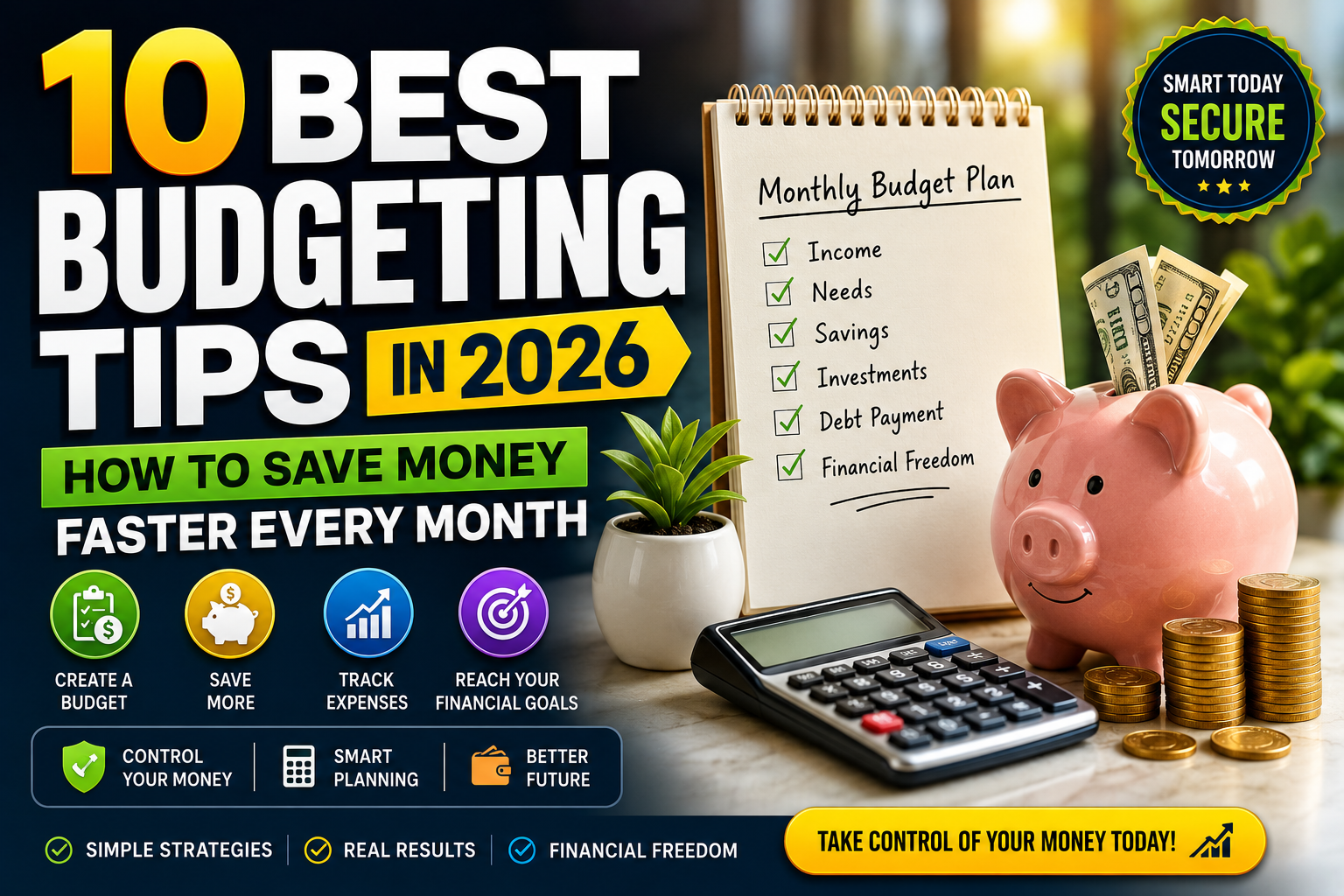
Budgeting is no longer just about writing expenses in a notebook. In 2026, rising living costs, subscription services, online shopping, and digital payments make it easier than ever to lose track of your money.
The good news is that the right budgeting strategy can help you take control of your finances, reduce stress, and save money faster every month. Whether you’re a student, freelancer, business owner, or someone trying to build an emergency fund, these budgeting tips can help you create a stronger financial future.
This guide covers the 10 best budgeting tips in 2026, along with practical money-saving strategies, common budgeting mistakes, and smart financial habits that actually work.

Why Budgeting Matters More Than Ever in 2026
Many people think budgeting means giving up everything they enjoy. In reality, budgeting is simply a plan for your money.
A good budget helps you:
- Save money consistently
- Avoid unnecessary debt
- Build an emergency fund
- Pay bills on time
- Reach financial goals faster
- Reduce financial stress
- Spend money with confidence
The goal is not to stop spending. The goal is to spend intentionally.

1. Follow the 50/30/20 Budget Rule
One of the most effective budgeting methods is the 50/30/20 rule.
This rule divides your income into three categories:
- 50% for Needs: Rent, groceries, utilities, transportation, and insurance.
- 30% for Wants: Entertainment, dining out, shopping, and hobbies.
- 20% for Savings and Debt Payments: Emergency fund, investments, and extra debt payments.
This method is popular because it is simple and flexible. You do not need complicated spreadsheets to get started.
If your expenses are high, start by tracking where your money goes and gradually move closer to the 50/30/20 target.

2. Track Every Dollar You Spend
Most people underestimate how much they spend each month.
Small purchases such as coffee, food delivery, streaming subscriptions, and online shopping can add up quickly.
Use a budgeting app, spreadsheet, or notebook to track all expenses for at least 30 days.
You may be surprised to discover categories where you are spending far more than expected.
Tracking expenses is often the first step toward saving hundreds of dollars each month.

3. Automate Your Savings
One of the best ways to save money is to remove the need to think about it.
Set up an automatic transfer from your checking account to a savings account every payday.
Even saving a small amount consistently can make a big difference over time.
For example, if you automatically save $200 per month, you could build a meaningful savings cushion within a year.
Automation helps you treat savings like a bill that must be paid every month.

4. Build an Emergency Fund First
Before investing or making large purchases, focus on creating an emergency fund.
An emergency fund can help cover unexpected expenses such as:
- Car repairs
- Medical bills
- Job loss
- Home repairs
- Family emergencies
Aim to save at least three to six months of essential expenses over time.
Start small if necessary. Even a few hundred dollars can prevent you from relying on credit cards during emergencies.

5. Use Budgeting Apps and AI Tools
Budgeting in 2026 is easier than ever thanks to modern financial apps.
Many budgeting apps can automatically categorize expenses, track subscriptions, and show spending trends.
Some AI-powered budgeting tools can even:
- Analyze your spending habits
- Suggest ways to save money
- Alert you about unusual transactions
- Predict future expenses
- Help you stay within your budget
Using technology can make budgeting faster, simpler, and more accurate.
6. Reduce Monthly Subscription Costs
Subscription services are one of the biggest hidden budget killers.
Take a close look at:
- Streaming services
- Music subscriptions
- Cloud storage plans
- Fitness apps
- Gaming memberships
- Software subscriptions
Cancel services you rarely use.
Many people save a significant amount each year simply by reviewing subscriptions every few months.
This is one of the easiest ways to reduce monthly expenses without changing your lifestyle dramatically.

7. Plan Your Grocery Spending
Food is often one of the largest monthly expenses.
To save money on groceries:
- Create a shopping list before going to the store.
- Plan meals for the week.
- Buy generic brands when quality is similar.
- Avoid shopping when hungry.
- Compare prices before purchasing.
- Use loyalty programs and discounts.
Meal planning can significantly reduce food waste and help you stay within your household budget.
8. Set Specific Financial Goals
Saving money is easier when you know exactly what you are saving for.
Instead of saying, “I want to save more money,” set a clear goal such as:
- Save $5,000 for an emergency fund
- Pay off a credit card
- Save for a vacation
- Build a down payment for a home
- Start investing
Specific goals make budgeting feel more rewarding because you can track your progress and celebrate milestones.

9. Try a No-Spend Challenge
A no-spend challenge is a popular budgeting trend in 2026.
For a set period, such as one week or one month, you avoid non-essential spending.
You still pay for necessities like rent, groceries, and transportation, but you pause discretionary purchases such as:
- Eating out
- Online shopping
- Entertainment purchases
- Impulse buys
Many people discover spending habits they did not realize they had.
A no-spend challenge can help reset your budget and increase your savings quickly.

10. Review Your Budget Every Month
A budget is not something you create once and forget.
Your income, expenses, and financial goals can change throughout the year.
At the end of each month, review:
- How much you earned
- How much you spent
- Which categories went over budget
- How much you saved
- What you can improve next month
This monthly review helps you stay on track and make better financial decisions over time.
Common Budgeting Mistakes to Avoid
Even people with good intentions can make budgeting mistakes.
Some of the most common include:
Not Tracking Expenses
If you do not know where your money is going, it is difficult to improve your budget.
Setting Unrealistic Limits
Cutting your entertainment budget from $300 to $0 overnight is often unsustainable.
Ignoring Irregular Expenses
Car maintenance, gifts, travel, and annual bills should be included in your budget.
Using Credit Cards Without a Plan
Credit cards can make overspending feel painless. Track credit card spending just like cash spending.
Giving Up After One Bad Month
Budgeting is a long-term habit. One difficult month does not mean your budget failed.
A Simple Monthly Budget Example
Imagine someone earns $4,000 per month.
Using the 50/30/20 rule, the budget could look like this:
| Category | Amount |
|---|---|
| Needs (50%) | $2,000 |
| Wants (30%) | $1,200 |
| Savings & Debt (20%) | $800 |
The $800 could be divided between an emergency fund, retirement savings, and extra debt payments.
This framework can be adjusted based on your income and financial goals.
Smart Money Habits That Build Wealth
Budgeting works best when combined with strong financial habits.
Try to:
- Pay yourself first by saving before spending.
- Avoid impulse purchases.
- Compare prices before buying.
- Increase savings when your income rises.
- Keep high-interest debt as low as possible.
- Learn basic investing and financial planning.
Small habits repeated consistently can have a bigger impact than dramatic financial changes.

Frequently Asked Questions
What is the best budgeting method in 2026?
The 50/30/20 rule is one of the most popular budgeting methods because it is simple, flexible, and easy for beginners to follow.
How can I save money faster every month?
Track your expenses, automate savings, reduce subscriptions, plan grocery spending, and avoid impulse purchases.
How much should I save each month?
A common goal is to save at least 20% of your income, but any consistent amount is better than not saving at all.
Are budgeting apps worth using?
Yes. Budgeting apps can help track expenses, organize your finances, and identify areas where you can save money.
What is the fastest way to start budgeting?
Start by tracking all income and expenses for 30 days. Then create spending categories and set realistic limits for each category.
Final Thoughts
The best budgeting tips in 2026 are not about extreme frugality or giving up everything you enjoy. They are about making intentional decisions with your money.
By following the 50/30/20 rule, tracking expenses, automating savings, building an emergency fund, and reviewing your budget regularly, you can save money faster every month and create a stronger financial future.
Remember that successful budgeting is a habit, not a one-time event. Start with one or two changes today, stay consistent, and gradually build a budget that works for your lifestyle and goals.
The sooner you take control of your money, the sooner your money can start working for you.