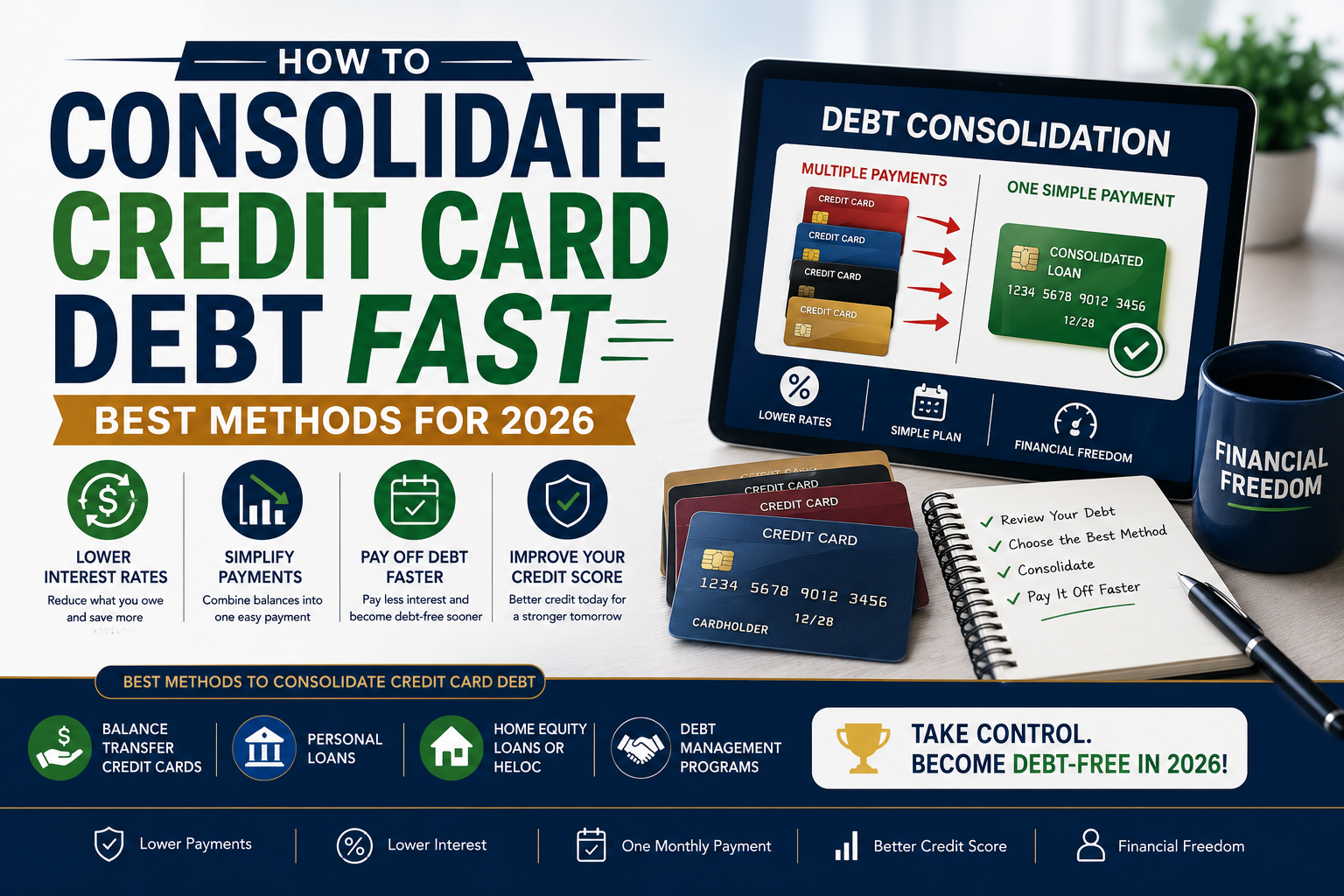
Learn how to consolidate credit card debt fast using loans, balance transfers, and debt programs. Reduce interest, simplify payments, and regain financial control.
How to Consolidate Credit Card Debt Fast
Credit card debt can quickly become overwhelming due to high interest rates and multiple monthly payments. If balances keep growing, it becomes harder to stay financially stable. Debt consolidation is one of the fastest and most effective ways to simplify payments and reduce overall interest costs.
This guide explains how to consolidate credit card debt fast using practical methods that can help you regain control of your finances.

Why Credit Card Debt Becomes Hard to Manage
Credit cards often come with high interest rates, sometimes exceeding 20% APR. When multiple cards are involved, each with different due dates and minimum payments, it becomes easy to miss payments or fall behind.
Over time, interest compounds and minimum payments barely reduce the principal balance. This is why many people look for consolidation options to combine all debts into a single, more manageable payment.
In most cases, consolidation works by using a new financial product—such as a personal loan, balance transfer credit card, or debt management plan—to pay off your existing credit card balances. Once those debts are cleared, you only owe money on the new consolidated account. This doesn’t erase your debt, but it reorganizes it in a more manageable and often more affordable way.
One of the biggest advantages of credit card debt consolidation is the potential reduction in interest rates. Credit cards typically have high APRs, which means a large portion of your payment goes toward interest rather than reducing the actual balance. When you consolidate, you may qualify for a lower interest rate, allowing more of your monthly payment to go toward paying down the principal debt faster.

What Is Credit Card Debt Consolidation?
Credit card debt consolidation means combining multiple credit card balances into one single payment. This can be done through a personal loan, balance transfer credit card, or debt management program.
The main goal is to reduce interest rates, simplify repayment, and make debt easier to manage. In many cases, borrowers also pay off debt faster because of lower interest costs.
Fastest Ways to Consolidate Credit Card Debt
1. Personal Loan for Debt Consolidation
One of the fastest methods is taking a fixed-rate personal loan to pay off all credit cards at once. This turns multiple payments into one monthly installment.
Lenders like LendingClub, Upstart, and Avant offer fast approval options, even for fair or bad credit borrowers.
2. Balance Transfer Credit Card
A balance transfer card allows you to move multiple credit card balances into one card with a low or 0% introductory APR. This gives you a temporary interest-free period to pay down debt faster.
However, approval usually requires fair to good credit, and there may be transfer fees involved.
3. Debt Management Plan (DMP)
A debt management plan is offered by credit counseling agencies. They negotiate with creditors to lower interest rates and combine payments into one monthly amount.
This method is helpful if you cannot qualify for loans or balance transfer cards but still want structured repayment.
4. Home Equity Loan or HELOC
If you own a home, you may qualify for a home equity loan or line of credit. These usually have lower interest rates because they are secured by your property.
However, this method carries risk since your home is used as collateral.
How to Choose the Fastest Option
The best option depends on your credit score, income, and total debt amount. If you have good credit, a balance transfer card may be the fastest and cheapest solution.
If your credit is low, a personal loan from lenders like OneMain Financial or Upgrade may be more realistic.
Steps to Consolidate Credit Card Debt Quickly
Start by calculating your total outstanding debt across all cards. Then check your credit score to understand which consolidation options you qualify for.
1. Calculate Your Total Credit Card Debt
Start by listing all your credit cards and noting the outstanding balance, interest rate, and minimum monthly payment for each one. This gives you a clear picture of how much you actually owe in total.
2. Check Your Credit Score
Your credit score plays a big role in determining which consolidation methods you qualify for. Some options, like balance transfer credit cards, require good credit, while personal loans may still be available for fair or bad credit borrowers.
3. Compare Debt Consolidation Options
Once you understand your debt and credit profile, compare the main consolidation methods. These usually include personal loans, balance transfer credit cards, and debt management plans.
4. Apply for the Best Option
After choosing the right method, submit your application to a lender or financial institution. Make sure your documents are ready, including proof of income, ID, and bank details, to speed up approval.
5. Use Funds to Pay Off All Credit Cards Immediately
Once approved, use the loan amount or transferred credit line to pay off all your existing credit card balances in full. This step is crucial because it officially consolidates your debt into one account.
After that, compare lenders or balance transfer offers. Once approved, use the funds to pay off all credit cards immediately so you only manage one payment moving forward.
Common Mistakes to Avoid
Many people continue using their credit cards after consolidation, which leads to new debt and defeats the purpose of consolidation. Another mistake is choosing high-fee loans without comparing alternatives.
It is also important not to miss payments on your new loan, as this can damage your credit further and increase financial stress.

Benefits of Credit Card Debt Consolidation
Debt consolidation simplifies your financial life by turning multiple payments into one. It can also reduce interest rates significantly, allowing more of your payment to go toward principal instead of interest.
Over time, consistent repayment can improve your credit score and help you regain financial stability.
Frequently Asked Questions
How fast can I consolidate credit card debt?
Some personal loans and balance transfers can be approved within 24–72 hours.
Does debt consolidation hurt my credit score?
It may cause a small temporary drop, but it usually improves credit long-term.
What is the easiest way to consolidate credit card debt?
For most people, a personal loan is the fastest and simplest option.
Conclusion
If you want to know how to consolidate credit card debt fast, the key is choosing the right method based on your credit profile. Personal loans, balance transfers, and debt management plans can all help you reduce interest and simplify payments.
With the right strategy, you can regain control of your finances and become debt-free faster than you expect.