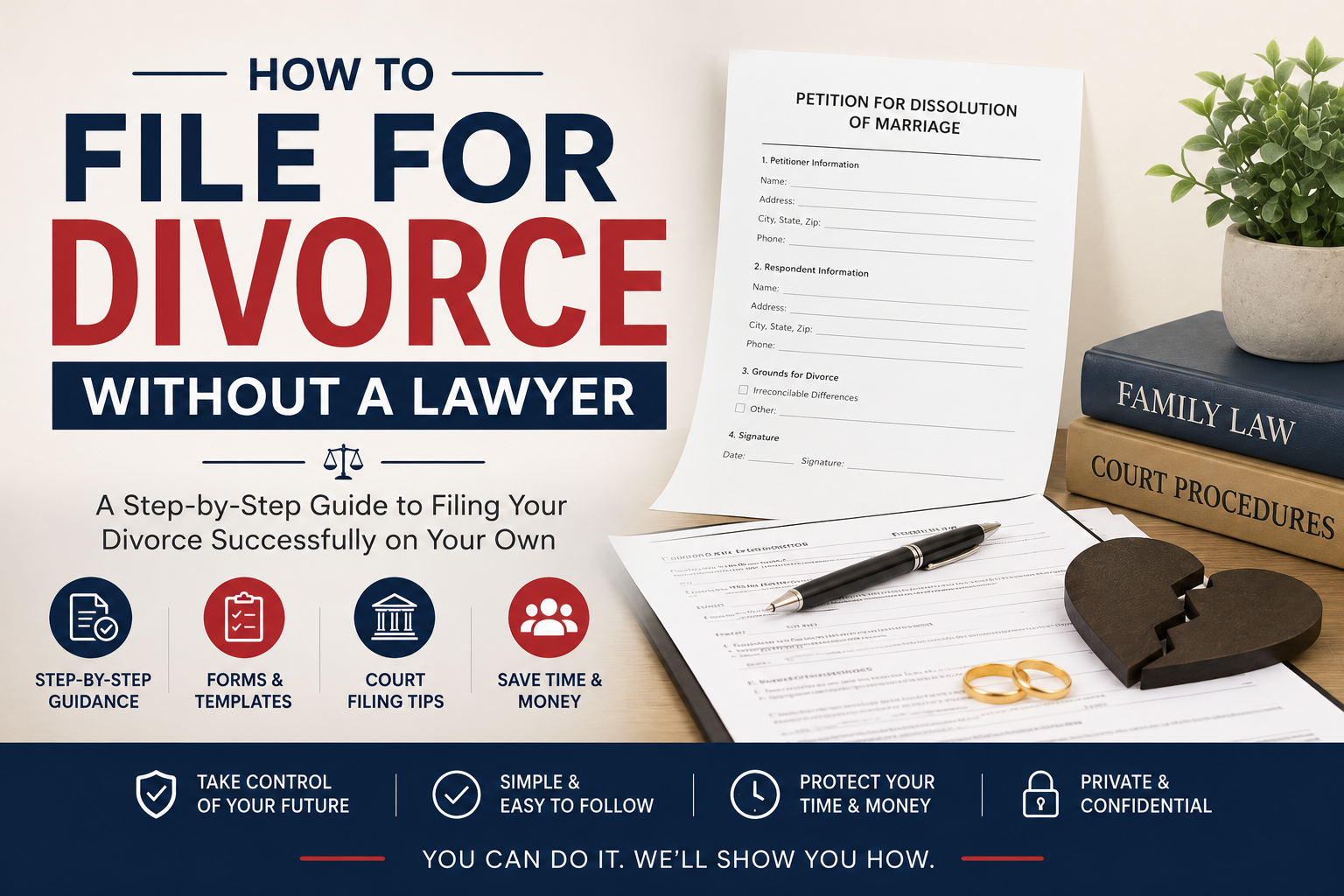
Understanding Divorce Without Legal Representation
Filing for divorce without a lawyer is known as a “pro se” or self-represented divorce. It means you handle all legal paperwork, court filings, and procedures on your own without hiring an attorney. Many people choose this option to save money, especially in cases where the divorce is uncontested and both spouses agree on major issues like property division, child custody, and support.
However, even though it is possible to complete the process without legal help, it still requires careful attention to detail. Each jurisdiction has its own rules, forms, and filing fees, and mistakes can delay the process or even lead to rejection by the court.
Step 1: Check If You Qualify for an Uncontested Divorce
Before filing on your own, it is important to determine whether your divorce is uncontested. An uncontested divorce means both partners agree on key matters such as asset distribution, debts, custody arrangements, and financial support.
If there are disagreements or conflicts, the process becomes more complicated and may require legal guidance. In uncontested cases, courts are more likely to approve self-filed divorces quickly because there is no need for extended hearings or legal disputes.

Step 2: Gather Required Documents
To file for divorce without a lawyer, you will need to collect important documents such as marriage certificates, identification records, financial statements, property details, and information about children if applicable.
Most courts also require you to complete specific divorce forms provided by the local family court system or civil court office. These forms usually include a divorce petition, financial disclosure statements, and settlement agreements if both parties have already reached an understanding.
Step 3: File Divorce Papers in Court
Once your documents are ready, you must submit them to your local court. This usually involves paying a filing fee and officially registering your divorce petition. After filing, the court assigns a case number and notifies the other spouse through a formal process called “service of process.”
This step is very important because improper service can delay your case or cause the court to dismiss your filing. Some jurisdictions allow certified mail or a process server to deliver the documents.
Step 4: Wait for Response and Court Processing
After the papers are served, the other spouse typically has a set period to respond. If they agree with the divorce terms, the process continues smoothly. If they disagree or fail to respond, the court may still proceed but may require additional hearings.
During this stage, the court reviews your documents to ensure everything is complete and legally valid. In uncontested cases, this step is usually straightforward and may not require a court appearance.
Step 5: Attend Court Hearing (If Required)
In some cases, the court may schedule a short hearing where a judge reviews your case. You may be asked questions about your agreement, finances, and arrangements for children if applicable.
If everything is in order, the judge will approve the divorce and issue a final decree. In many uncontested cases, this step is quick and mostly procedural.

Common Challenges When Filing Without a Lawyer
While filing for divorce without legal help can save money, it also comes with risks. Common challenges include incomplete paperwork, misunderstanding legal terms, missing deadlines, and improper filing procedures.
Another major issue is ensuring fair agreements. Without legal advice, one party may unintentionally accept unfavorable terms regarding property or custody. That is why many people at least consult a lawyer before finalizing documents.
Conclusion
Filing for divorce without a lawyer is possible, especially in simple, uncontested cases. However, it requires careful preparation, proper documentation, and a clear understanding of court procedures. While it can save money, it is important to avoid mistakes that could delay or complicate the process.
If your situation is straightforward, self-filing can be an efficient option. But if your case involves disputes or complex assets, seeking legal advice may still be the safer choice.