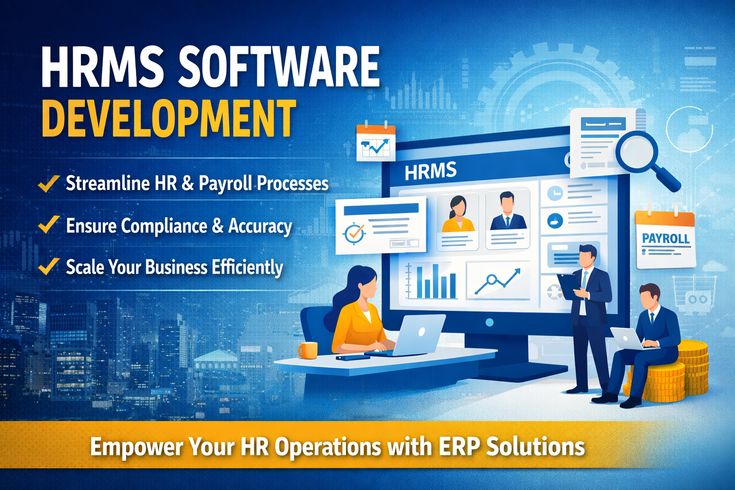
Managing human resources in a large organization is far more complex than handling payroll, recruitment, and employee records. As companies grow beyond hundreds or thousands of employees, HR departments face increasing challenges related to workforce management, compliance, talent acquisition, employee engagement, performance tracking, benefits administration, and workforce analytics. Traditional HR methods and disconnected software solutions often struggle to keep up with the demands of large-scale operations.
This is why investing in Human Resource Management Software (HRMS) has become a strategic necessity for large companies. Modern HRMS platforms provide a centralized system that helps organizations automate HR processes, improve employee experiences, ensure regulatory compliance, and make data-driven workforce decisions. From recruitment and onboarding to performance management and workforce planning, enterprise HR software plays a critical role in helping businesses manage their most valuable asset—their people.
As workforce expectations continue to evolve and organizations embrace hybrid work environments, AI-powered automation, and global expansion, the need for sophisticated HR technology has never been greater. Large enterprises require scalable solutions that can support thousands of employees across multiple locations while delivering seamless experiences for HR teams, managers, and employees alike.
In this comprehensive guide, we’ll explore everything you need to know about human resource management software for large companies, including its benefits, key features, implementation strategies, top software solutions, and how to choose the right platform for your organization.

What Is Human Resource Management Software?
Human Resource Management Software, commonly referred to as HRMS, is a comprehensive technology platform designed to streamline and automate various HR functions within an organization. It serves as a centralized hub where businesses can manage employee information, recruitment activities, payroll processing, benefits administration, performance evaluations, compliance requirements, training programs, and workforce analytics.
Unlike basic HR tools that focus on a single function, modern HRMS platforms integrate multiple human resource processes into one unified system. This integration reduces administrative workloads, improves data accuracy, and enhances collaboration between HR departments and business leaders.
For large companies, HRMS serves as the foundation of workforce management by providing real-time visibility into employee data and organizational performance. These platforms enable HR professionals to focus on strategic initiatives rather than spending excessive time on repetitive administrative tasks.
As organizations grow, managing employees through spreadsheets, paper files, and disconnected software systems becomes increasingly inefficient. HRMS solutions address these challenges by automating workflows and creating a more efficient, scalable HR ecosystem.
Why Large Companies Need HR Management Software
Large organizations face workforce management challenges that smaller businesses rarely encounter. Managing thousands of employees across multiple departments, locations, and countries requires advanced tools capable of handling complexity while maintaining consistency and compliance.
One of the primary reasons large companies invest in HR management software is operational efficiency. Manual HR processes consume significant time and resources, making it difficult for HR teams to focus on strategic priorities such as talent development, employee engagement, and workforce planning.
Compliance is another critical concern. Large organizations must adhere to numerous labor laws, industry regulations, workplace safety standards, and data privacy requirements. HRMS platforms help automate compliance tracking and reporting, reducing legal risks and potential penalties.
Additionally, workforce data is often scattered across multiple systems in large enterprises. HR management software consolidates employee information into a centralized database, providing leaders with actionable insights that support better decision-making.
As businesses continue expanding globally and adopting hybrid work models, HRMS platforms become essential for maintaining organizational consistency and ensuring seamless employee experiences.
Key Features of Human Resource Management Software
Human Resource Management Software (HRMS) has become an essential technology solution for large companies seeking to streamline workforce management, improve operational efficiency, and enhance employee experiences. Modern organizations manage thousands of employees across multiple departments, locations, and even countries, making traditional HR processes increasingly difficult to maintain. Human Resource Management Software addresses these challenges by centralizing employee data, automating administrative tasks, and providing valuable workforce insights that support strategic decision-making.
The effectiveness of an HRMS platform largely depends on the features it offers. While different software providers may emphasize specific capabilities, the best enterprise HR solutions include a comprehensive set of tools designed to support every stage of the employee lifecycle. Understanding these key features can help organizations choose a platform that aligns with their workforce management goals and long-term growth strategies.
Choosing the right HRMS requires understanding the features that provide the greatest value for large organizations.
Employee Information Management
At the core of every HRMS platform is a centralized employee database. This feature stores employee records, contact information, job histories, compensation details, certifications, and performance data in a secure environment.
Centralized employee information reduces duplication, improves data accuracy, and enables HR teams to access critical workforce information quickly.
Human Resource Management Software (HRMS) has become an essential technology solution for large companies seeking to streamline workforce management, improve operational efficiency, and enhance employee experiences. Modern organizations manage thousands of employees across multiple departments, locations, and even countries, making traditional HR processes increasingly difficult to maintain. Human Resource Management Software addresses these challenges by centralizing employee data, automating administrative tasks, and providing valuable workforce insights that support strategic decision-making.
The effectiveness of an HRMS platform largely depends on the features it offers. While different software providers may emphasize specific capabilities, the best enterprise HR solutions include a comprehensive set of tools designed to support every stage of the employee lifecycle. Understanding these key features can help organizations choose a platform that aligns with their workforce management goals and long-term growth strategies.

Recruitment and Applicant Tracking
Hiring top talent remains one of the most important priorities for large organizations. HRMS platforms often include Applicant Tracking Systems (ATS) that streamline recruitment processes from job posting to candidate selection.
Recruiters can manage job openings, screen applications, schedule interviews, and collaborate with hiring managers through a unified platform.
Automated workflows accelerate hiring processes while improving candidate experiences.
Employee Onboarding
Effective onboarding significantly impacts employee retention and productivity. HRMS solutions automate onboarding tasks such as document collection, policy acknowledgments, training assignments, and equipment requests.
A structured onboarding experience helps new hires integrate into the organization more quickly while reducing administrative workloads.
Payroll Management
Many HRMS platforms include integrated payroll functionality that automates salary calculations, tax withholdings, deductions, reimbursements, and direct deposits.
Payroll integration improves accuracy while ensuring employees are compensated correctly and on time.
For large organizations operating across multiple locations, automated payroll processing can save countless administrative hours.
Benefits Administration
Managing employee benefits becomes increasingly complex as organizations grow. HRMS platforms simplify benefits enrollment, eligibility tracking, open enrollment processes, and compliance reporting.
Employees can access benefits information through self-service portals, improving transparency and engagement.
Performance Management
Performance management tools help organizations set goals, conduct evaluations, track employee progress, and identify development opportunities.
Modern HRMS platforms often support continuous feedback models rather than relying solely on annual reviews.
These tools help align employee performance with organizational objectives while fostering professional growth.
Learning and Development
Employee development is essential for maintaining a competitive workforce. HRMS solutions frequently include learning management systems that support training programs, certifications, skill development, and career planning.
Organizations can track employee progress and identify skills gaps through centralized reporting.
Workforce Analytics
Data-driven decision-making has become a key priority for HR leaders. Workforce analytics tools provide insights into employee turnover, recruitment performance, labor costs, engagement levels, and productivity trends.
These insights help organizations make informed workforce planning decisions.

Benefits of HR Management Software for Large Companies
As organizations grow in size and complexity, managing human resources becomes increasingly challenging. Large companies often employ hundreds or thousands of workers across multiple departments, offices, regions, and even countries. Handling recruitment, onboarding, payroll, benefits administration, compliance, performance management, and employee development through manual processes or disconnected systems can create inefficiencies, increase costs, and hinder business growth.
This is where Human Resource Management Software (HRMS) plays a transformative role. Modern HRMS platforms provide a centralized solution that automates HR processes, improves workforce visibility, enhances employee experiences, and supports strategic decision-making. For large companies, implementing a comprehensive HR management system is no longer just an operational improvement—it has become a critical business investment that directly impacts productivity, compliance, employee retention, and long-term success.
Implementing HR management software provides numerous benefits that extend beyond administrative efficiency.
Improved Operational Efficiency
Automation eliminates repetitive tasks such as data entry, payroll processing, leave management, and compliance reporting. HR professionals can spend more time focusing on strategic initiatives that drive business value.
Better Employee Experience
Modern employees expect digital experiences similar to those they encounter in consumer applications. Self-service portals, mobile accessibility, and streamlined workflows improve employee satisfaction and engagement.
Enhanced Compliance
Regulatory requirements continue to evolve across industries and jurisdictions. HRMS platforms help organizations stay compliant by automating recordkeeping, reporting, and policy management.
Centralized Workforce Data
A single source of truth for employee information improves accuracy and supports better decision-making across the organization.
Stronger Talent Management
Recruitment, onboarding, performance management, and career development tools help attract, retain, and develop top talent.
Scalability
HRMS platforms grow alongside the organization, supporting workforce expansion without requiring major process changes.
Top Human Resource Management Software for Large Companies
Workday Human Capital Management
Workday is one of the most popular enterprise HR solutions available today. Designed for large organizations, Workday combines HR management, payroll, workforce planning, analytics, and talent management into a unified cloud platform.
The software provides real-time visibility into workforce data while supporting global HR operations. Its advanced analytics capabilities help leaders make informed decisions based on accurate employee insights.
Workday is particularly well-suited for multinational corporations with complex workforce requirements.
Key Strengths
- Enterprise scalability
- Advanced analytics
- Global workforce management
- Talent management tools
- Workforce planning capabilities
SAP SuccessFactors
SAP SuccessFactors is a comprehensive cloud-based HR platform that supports employee lifecycle management from recruitment to retirement.
The platform offers robust functionality for performance management, learning and development, workforce analytics, compensation planning, and succession management.
Large organizations benefit from its strong integration capabilities and global compliance support.
Key Strengths
- Talent management
- Global HR support
- Workforce analytics
- Learning management
- Compensation planning
Oracle Fusion HCM
Oracle Fusion HCM provides enterprise-level HR management capabilities with powerful automation and AI-driven insights.
The platform supports recruitment, onboarding, payroll, workforce management, and employee engagement initiatives through a unified ecosystem.
Oracle’s advanced reporting capabilities help organizations analyze workforce performance and optimize HR strategies.
Key Strengths
- AI-powered insights
- Workforce planning
- Enterprise scalability
- Strong security features
- Comprehensive HR functionality
UKG Pro
UKG Pro is a leading HR and workforce management platform designed for large organizations. The software combines HR administration, payroll, workforce scheduling, and talent management capabilities.
UKG Pro is particularly popular among organizations with large hourly workforces due to its advanced scheduling and workforce optimization tools.
Key Strengths
- Workforce management
- Payroll integration
- Employee engagement tools
- Scheduling capabilities
- Compliance support
ADP Workforce Now
ADP Workforce Now offers a complete suite of HR, payroll, benefits administration, and talent management tools.
Its scalability and compliance expertise make it a popular choice for growing enterprises seeking a reliable HR platform.
Key Strengths
- Payroll expertise
- Benefits administration
- Compliance support
- Workforce analytics
- Scalable architecture

Challenges of Implementing HR Management Software
Despite its benefits, implementing HRMS software can present challenges.
Organizations often encounter resistance to change as employees adapt to new workflows and technologies. Proper training and communication are essential for successful adoption.
Data migration can also be complex, particularly when employee records are stored across multiple systems. Careful planning helps minimize disruptions during implementation.
Integration with existing software systems may require technical expertise and additional resources.
However, organizations that invest in proper implementation strategies typically achieve significant long-term returns.
How to Choose the Best HRMS for Your Organization
Selecting the right HR management software requires evaluating organizational goals, workforce size, budget, and future growth plans.
Key considerations include:
- Scalability
- User experience
- Integration capabilities
- Security standards
- Compliance features
- Reporting functionality
- Mobile accessibility
- Vendor support services
Organizations should prioritize solutions that align with both current requirements and long-term strategic objectives.
The Future of Human Resource Management Software
The future of HR technology is being shaped by artificial intelligence, automation, predictive analytics, and employee experience innovations.
AI-powered recruiting tools are improving candidate screening and hiring decisions. Predictive analytics helps organizations identify turnover risks and workforce trends before problems emerge.
Employee experience platforms are becoming increasingly important as organizations compete for talent in a rapidly evolving labor market.
Cloud-based HRMS solutions will continue driving digital transformation by enabling flexible, data-driven workforce management strategies.
As technology advances, HR software will become even more intelligent, personalized, and integrated into broader business operations.
Frequently Asked Questions
What is the best HR management software for large companies?
Popular options include Workday, SAP SuccessFactors, Oracle Fusion HCM, UKG Pro, and ADP Workforce Now. The best choice depends on organizational needs and workforce complexity.
Why do large companies need HRMS software?
HRMS software helps automate HR processes, improve compliance, enhance employee experiences, and support data-driven decision-making.
Can HRMS software integrate with payroll systems?
Yes. Most modern HRMS platforms include payroll functionality or integrate seamlessly with payroll solutions.
Is cloud-based HR software better for enterprises?
Cloud-based solutions typically offer greater scalability, flexibility, accessibility, and automatic updates compared to traditional on-premises systems.
How does HR software improve employee engagement?
Employee self-service portals, performance management tools, career development programs, and communication features contribute to stronger engagement and satisfaction.
Conclusion
Human Resource Management Software for large companies has evolved from a helpful administrative tool into a critical component of modern business strategy. As organizations grow, workforce management becomes increasingly complex, requiring advanced technology capable of supporting recruitment, onboarding, payroll, compliance, performance management, learning, and workforce analytics within a unified platform.
Leading solutions such as Workday, SAP SuccessFactors, Oracle Fusion HCM, UKG Pro, and ADP Workforce Now empower organizations to streamline operations, improve employee experiences, and make smarter workforce decisions. By automating routine tasks and providing valuable insights, HRMS platforms enable HR teams to focus on strategic initiatives that drive organizational success.
For large enterprises seeking sustainable growth, improved efficiency, and competitive workforce management capabilities, investing in the right human resource management software is one of the most important technology decisions they can make in 2026 and beyond.